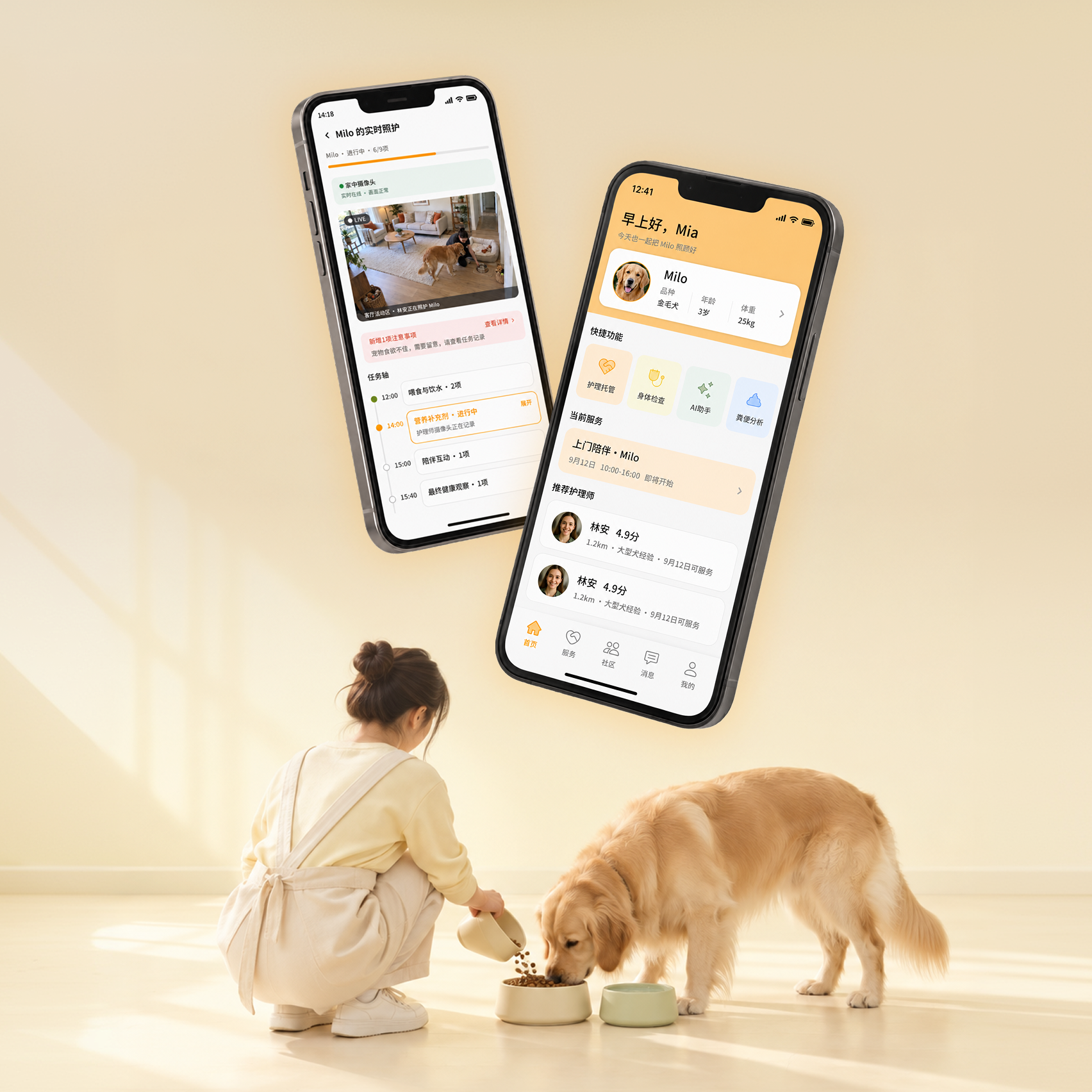
PetaLife two-sided pet care app and care scenario

Service Experience / UIUX Design | Industry–University Project | Sep–Nov 2025

PetaLife Pet Care Service

Project overview

Addressing owners’ concerns while away by connecting them with carers and making care tasks and progress feedback traceable.

My work

Contributed to interviews, needs analysis, and service-flow design, and led owner/carer interaction prototypes, user testing, and iteration.

Project outcomes

Two-sided service flowBooking and care tasks
High-fidelity prototypeOwner and carer experiences
User testing findingsIssues and refinements
Scroll to explore
项目背景Background

What does PetaLife do?

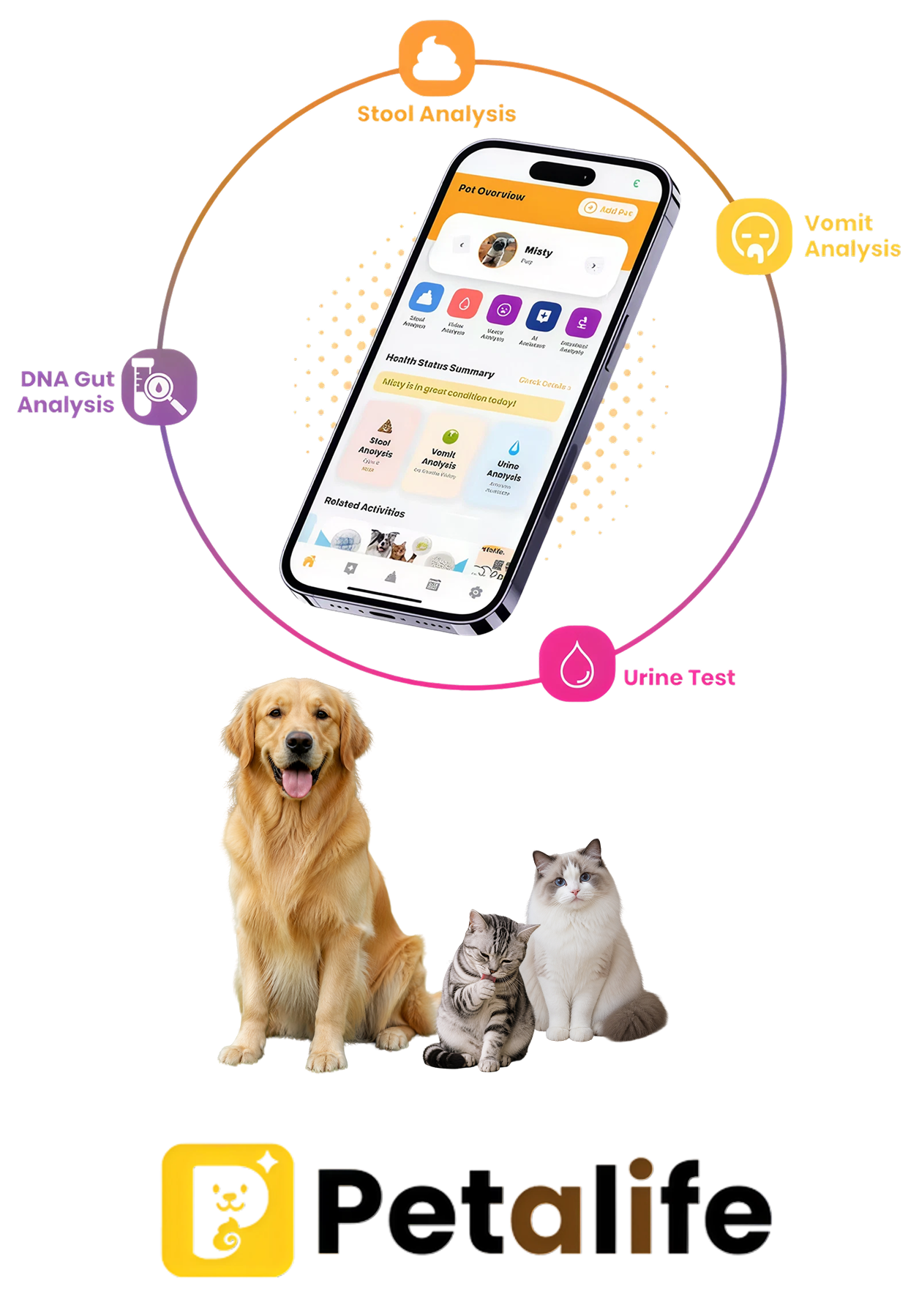
PetaLife is a startup exploring products for pet-health observation. Its existing product combines AI-based analysis of pet stool images with health records, helping owners notice abnormalities and seek professional support in time rather than replacing veterinary care.

Existing foundation

Image analysis and health records

Pet-health tools and an existing user base

Business challenge

Users struggle to build a lasting habit of proactive recording

Product trust and long-term service relationships remain to be established

In which real care scenarios could PetaLife’s health-observation capabilities provide more specific support?

PetaLife pet-health product, companion animals, and brand identity
用户研究User Research

Pet owners’ care challenges

In a public survey of 642 pet owners, 55.8% reported difficulty travelling alone, while 28.8% struggled to handle pet-health emergencies.
Across initial interviews with nine pet owners, care by friends and family, pet boarding, and leaving pets at home alone were also recurring experiences.

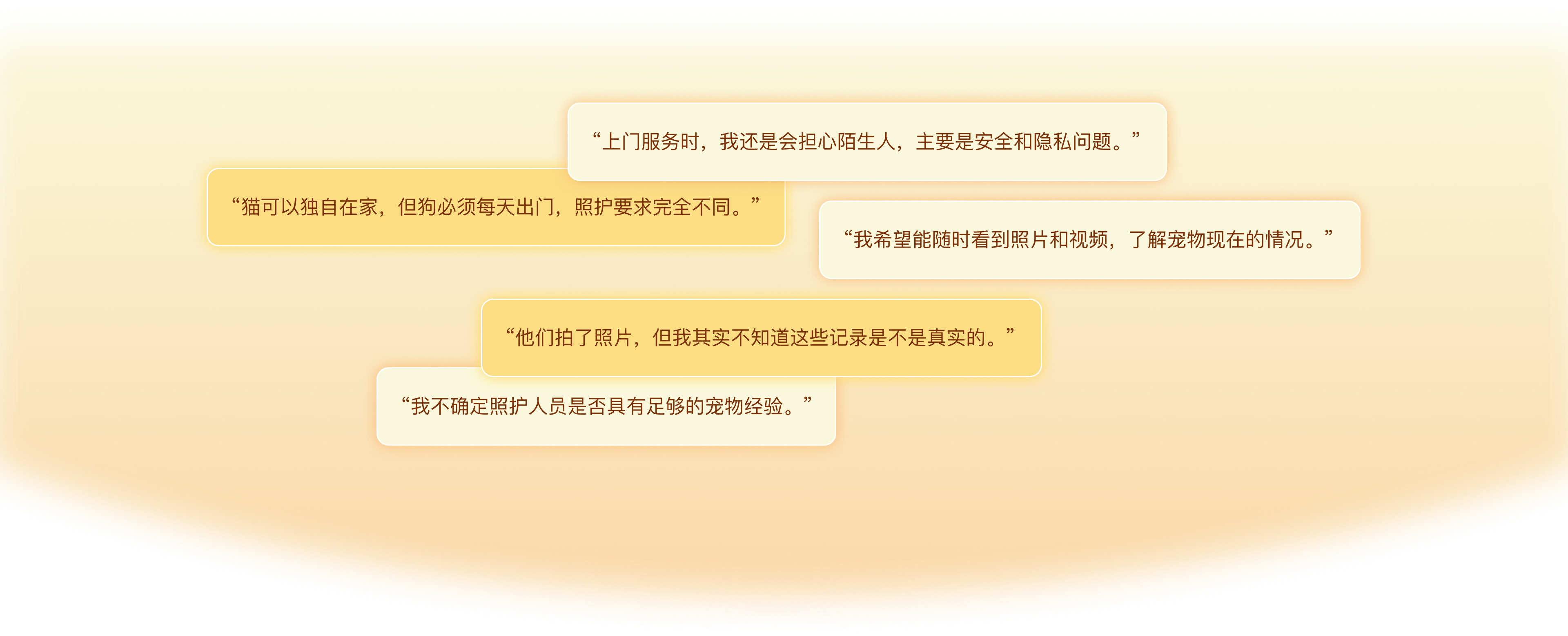
We focused the open business brief on “care while pet owners are away” and conducted in-depth interviews with nine pet owners:

Pet-owner interview quotes about care differences, privacy, feedback, record authenticity, and carer experience

We distilled the findings into research insightsand identified design opportunities.

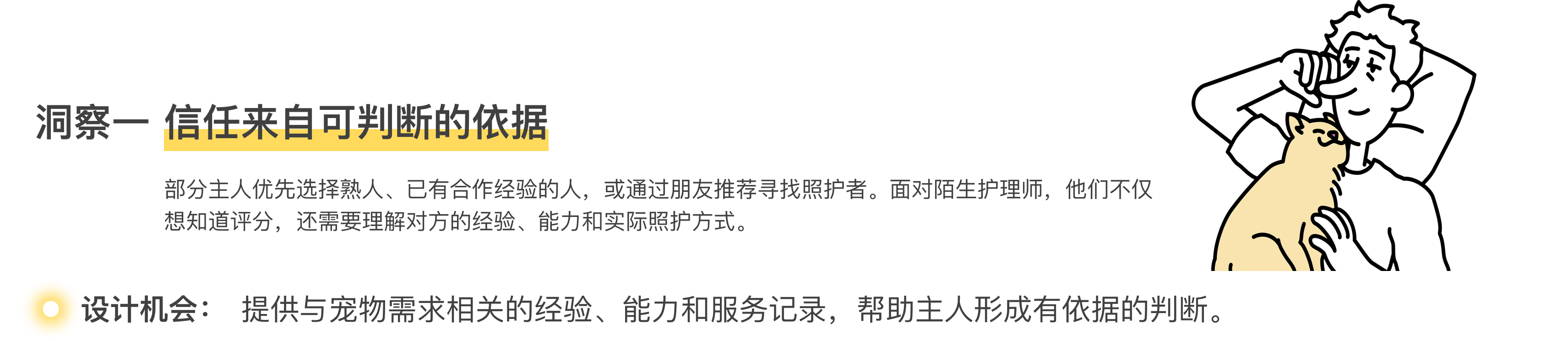
Insight one: trust comes from evidence people can assess; surface relevant experience, capabilities, and service history
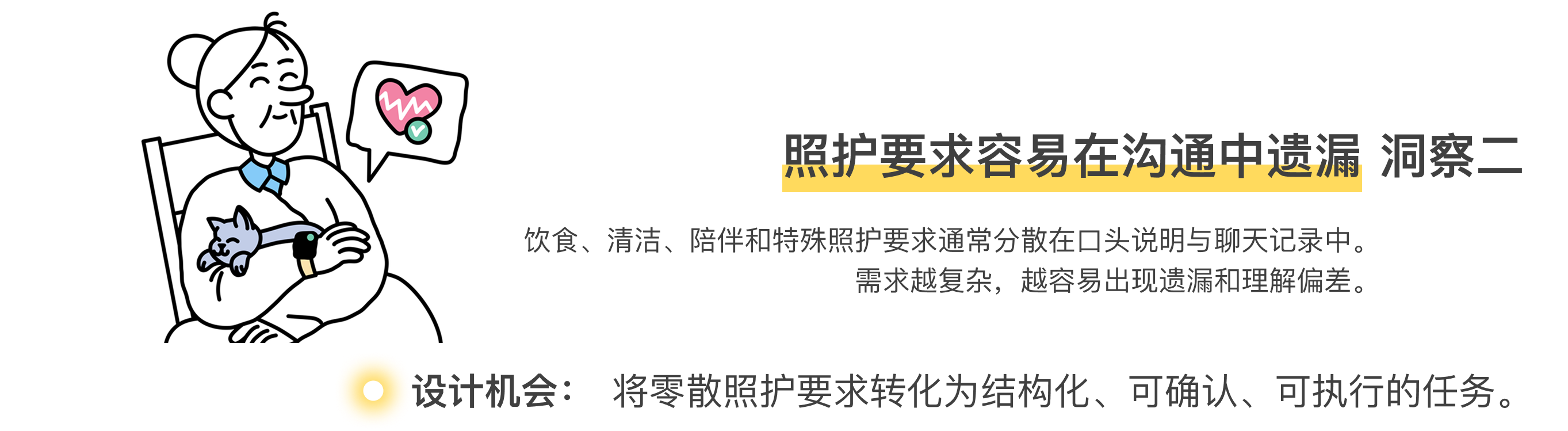
Insight two: care requirements are easily lost in conversation; convert them into confirmable and actionable tasks
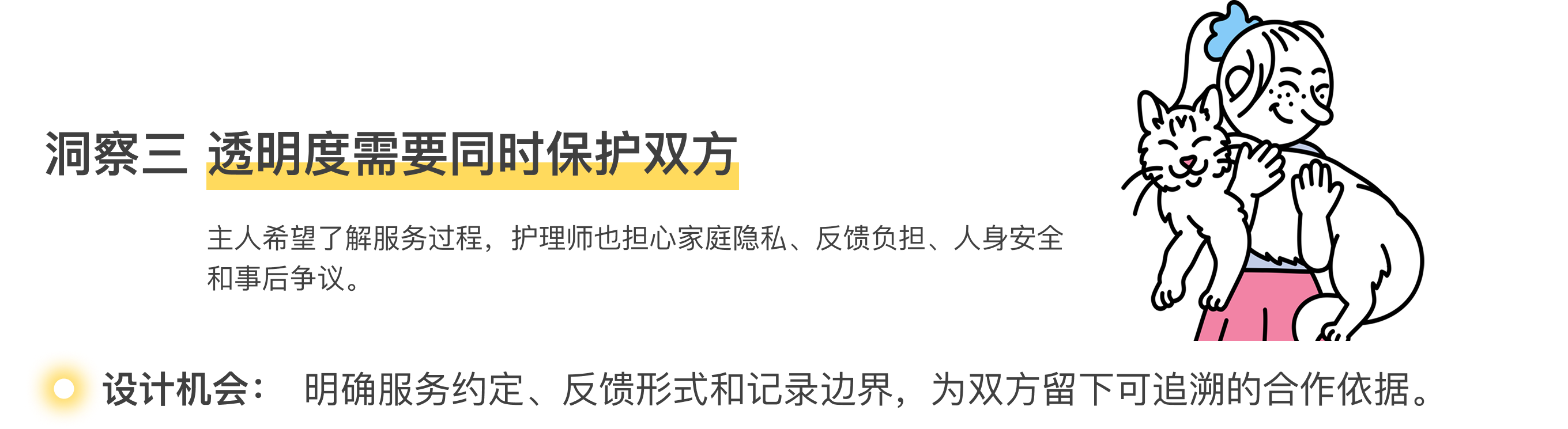
Insight three: transparency must protect both parties; define agreements, feedback formats, and recording boundaries

The final design question:

How might we help pet owners and carers build mutual trustand collaborate smoothly when owners cannot provide care themselves?
服务策略Service Strategy

Connecting all three sides of pet care

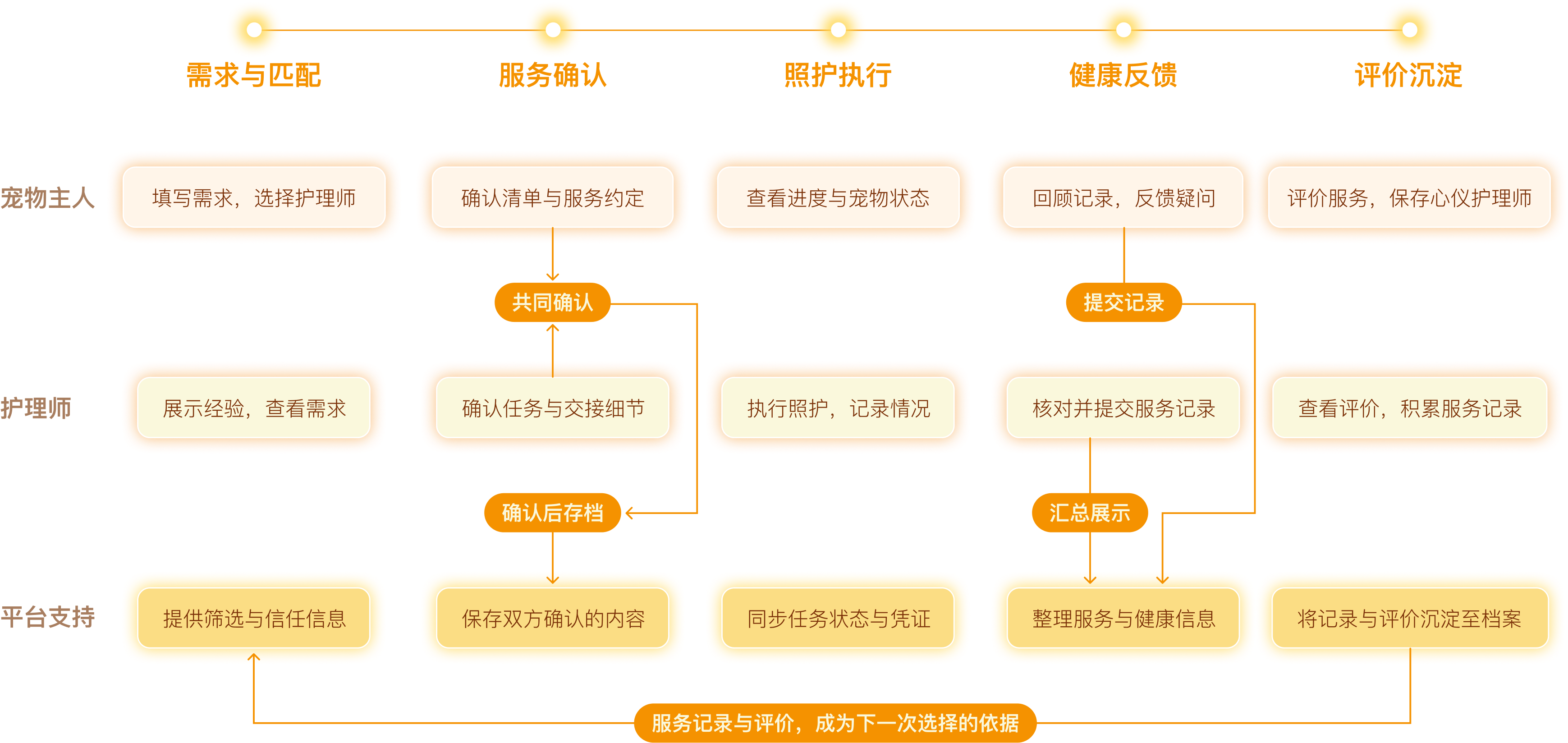
We organized offline care into a shared service journey for owners, carers, and the platform. Both parties collaborate around the same tasks, while care records and reviews build a foundation of trust for future cooperation.

Service blueprint in Chinese: five stages—needs and matching, service confirmation, care delivery, health feedback, and reviews—across pet owners, carers, and platform support. Both parties confirm the care agreement before it is archived. Task status and evidence are synchronized during care, health records are consolidated afterward, and records and reviews inform the next booking.View the full service blueprint (original image)
核心体验设计User Experience

Finding a carer worth trusting

When owners cannot be with their pets, how can they find someone who meets their pet’s needs and feels trustworthy? Starting from the pet profile, PetaLife recommends carers based on time, location, and care needs. Carer profiles, community posts, and service reviews help both sides understand one another before beginning a service relationship.

Drag left or right with your mouse, or swipe horizontally on a trackpad, to see more screens

01 / 05
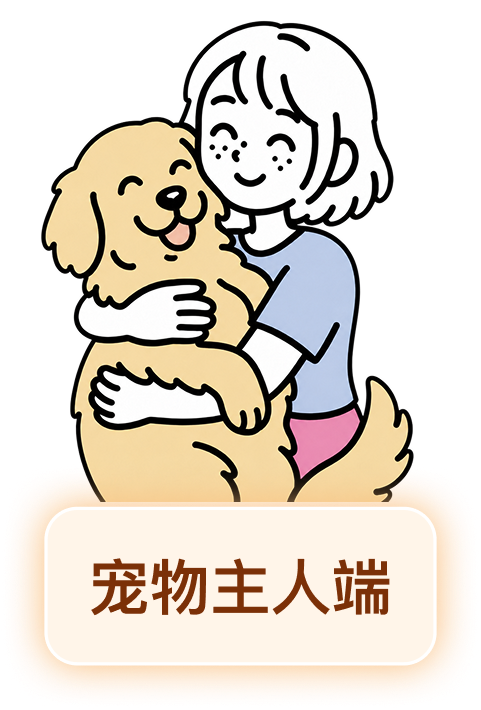
Pet owner
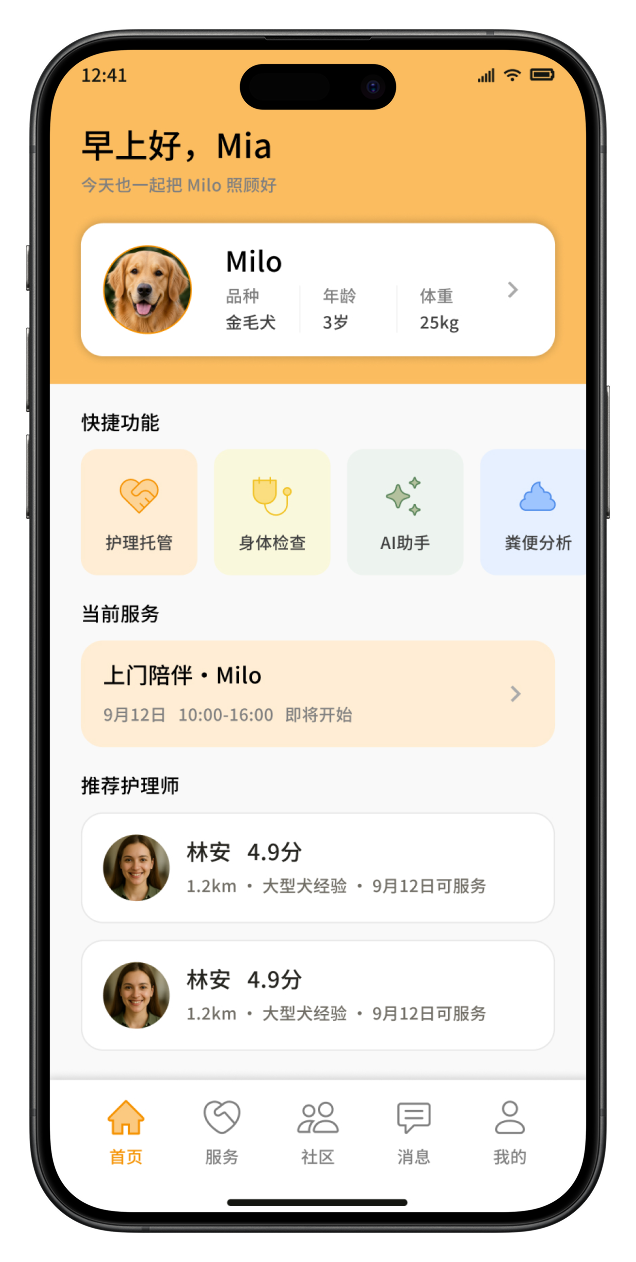
PetaLife owner home screen with pet profile, quick actions, current service, and recommended carers

01 Start a care arrangement

Pet profiles, quick actions, and current services are brought together so owners can understand the care status and start looking for the right carer.

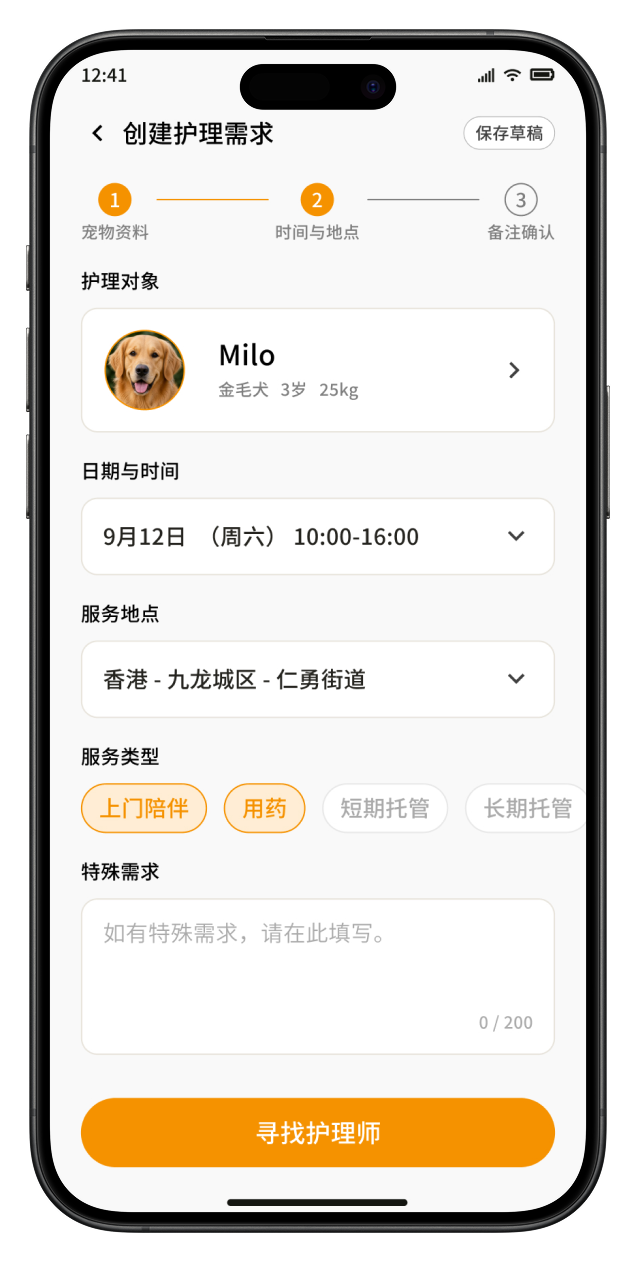
Create-care-request screen with pet, time, location, service type, and special requirements

02 Describe the care needs

Reuse the existing pet profile and add time, location, service type, and special requirements to communicate a complete request.

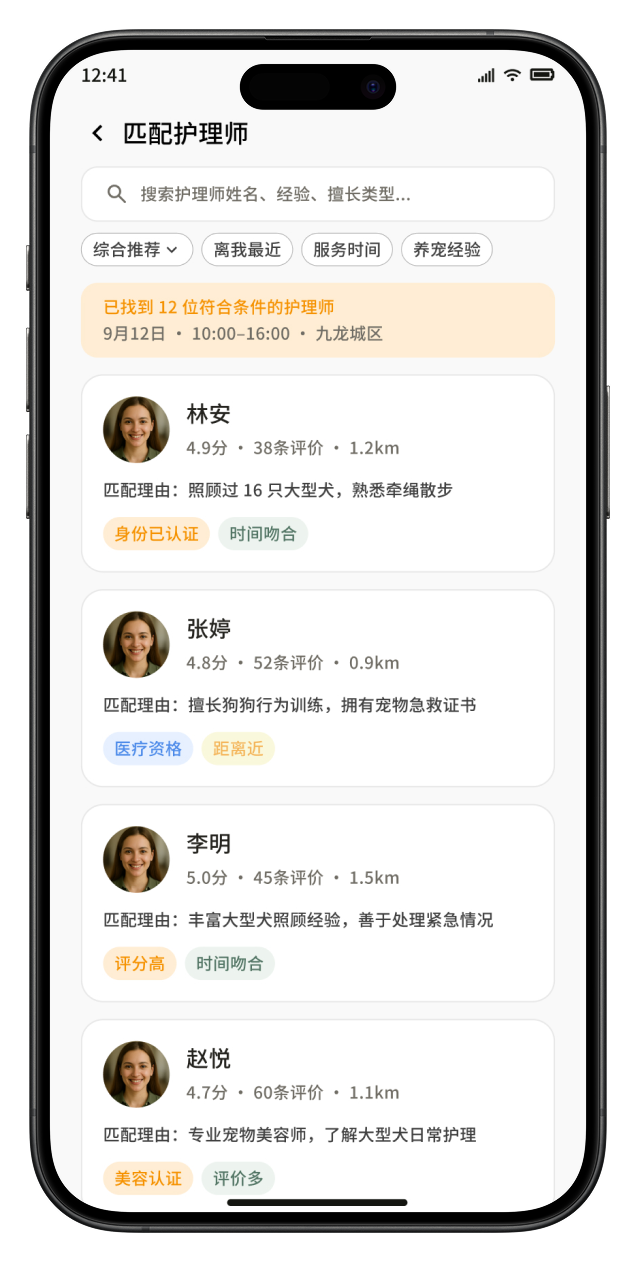
Carer-matching screen with reviews, distance, availability, and matching reasons

03 Find a suitable carer

Show matching reasons alongside reviews, distance, and availability to help owners find an appropriate carer.

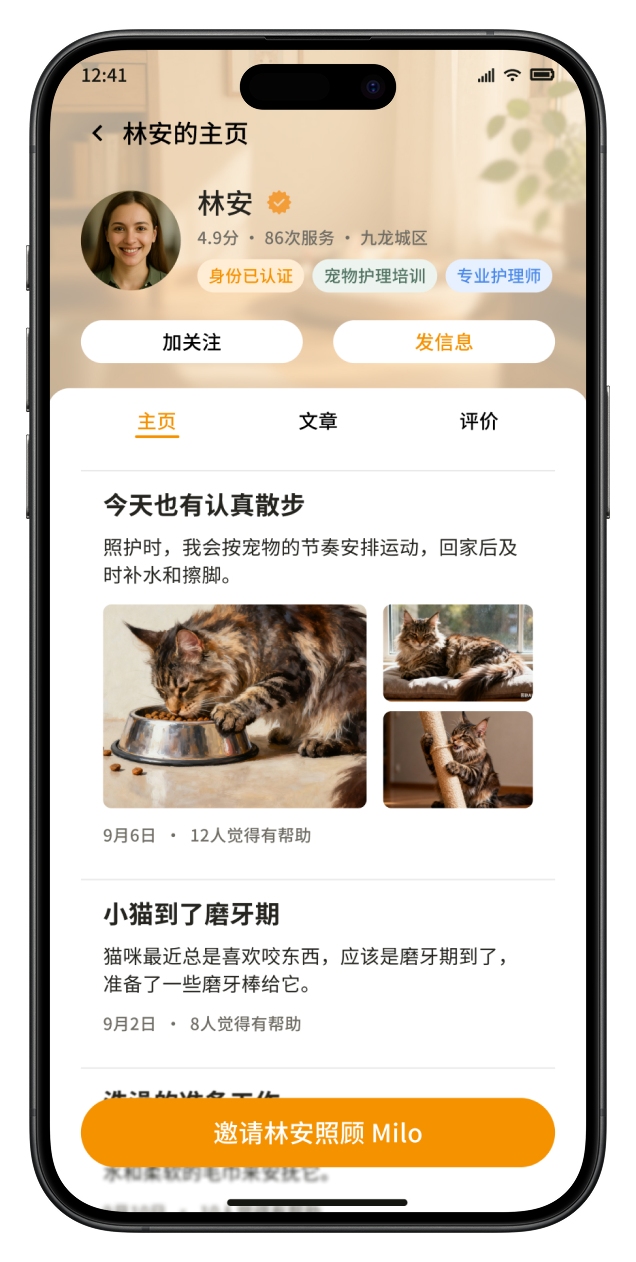
Carer Lin An’s profile with qualifications, reviews, and everyday care posts

04 Understand everyday care practices

Qualifications, service reviews, and daily posts reveal a carer’s experience and habits, offering more evidence before an invitation is sent.

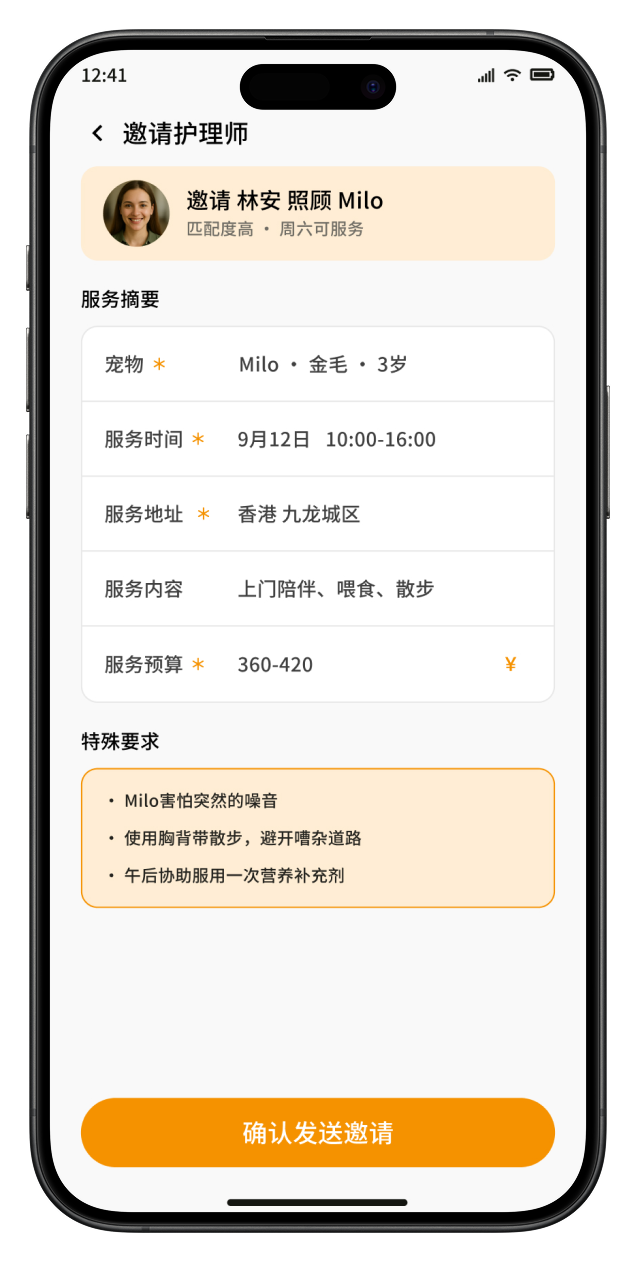
Care-invitation review screen with service summary and special pet requirements

05 Review and send the invitation

Owners review the arrangement and special requirements so every important detail travels with the invitation.

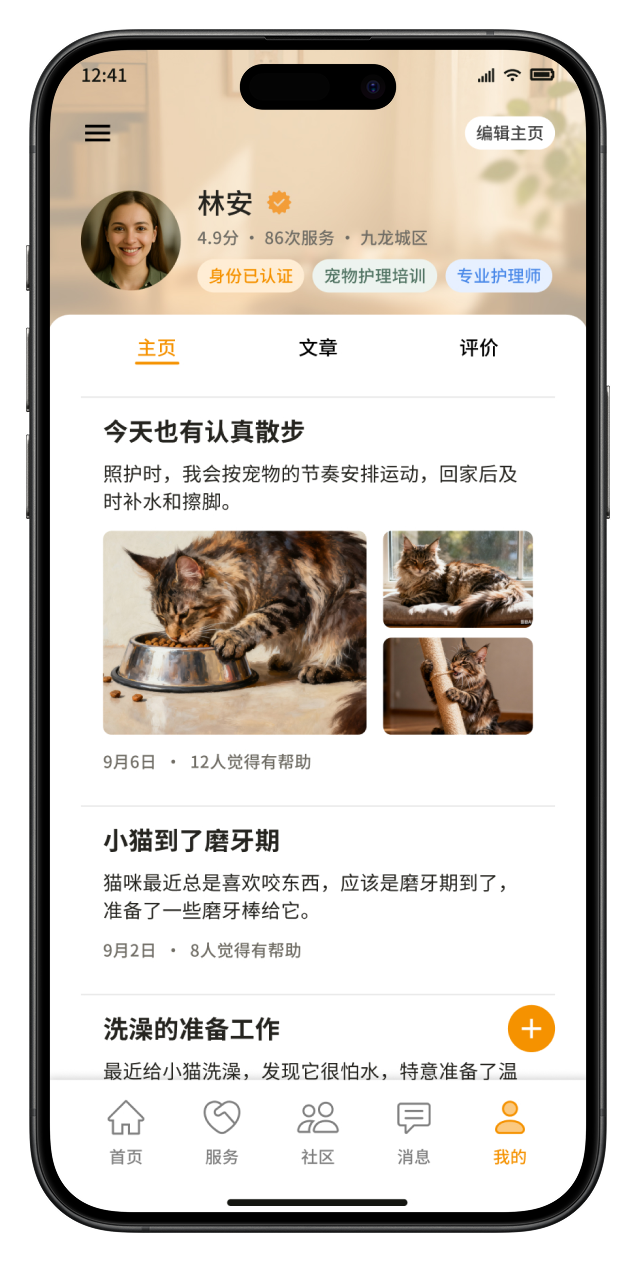
Carer Lin An’s profile with credentials and pet-care articles

01 Build a professional profile

Carers upload qualifications and share pet-care knowledge to communicate their professionalism and build credibility.

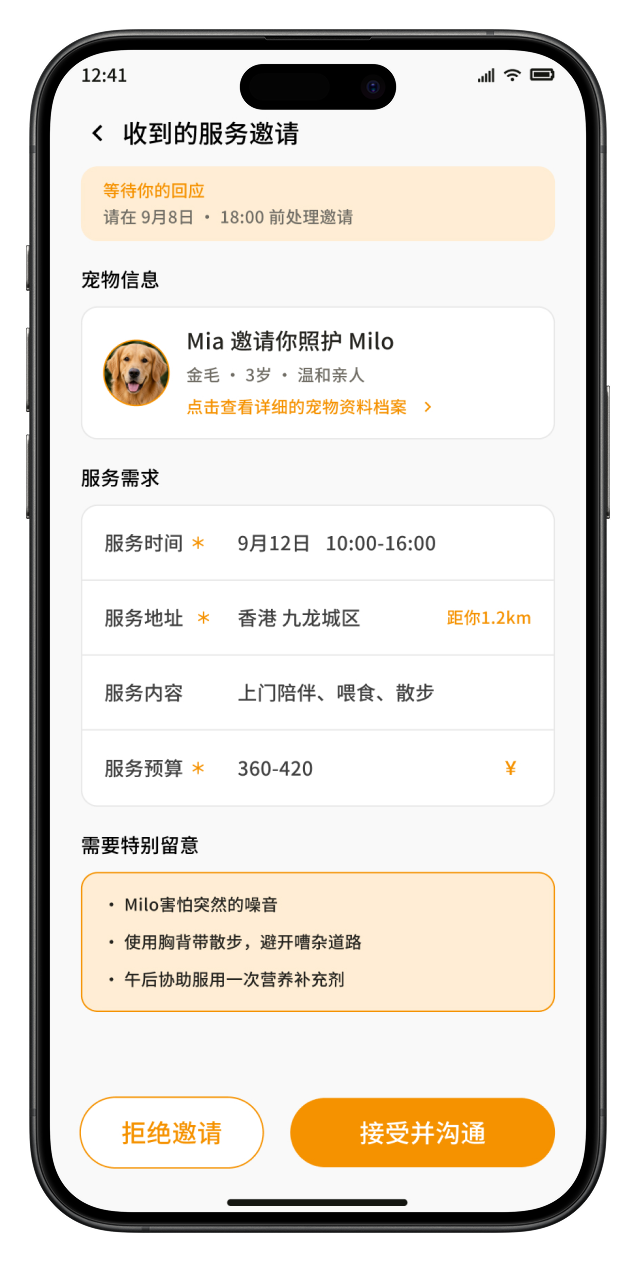
Received service invitation with pet profile, care requirements, and response actions

02 Review and respond to an invitation

After receiving an invitation, the carer reviews the pet profile and service plan, then accepts, declines, or continues the conversation.

Carer

Turning care habits into clear tasks

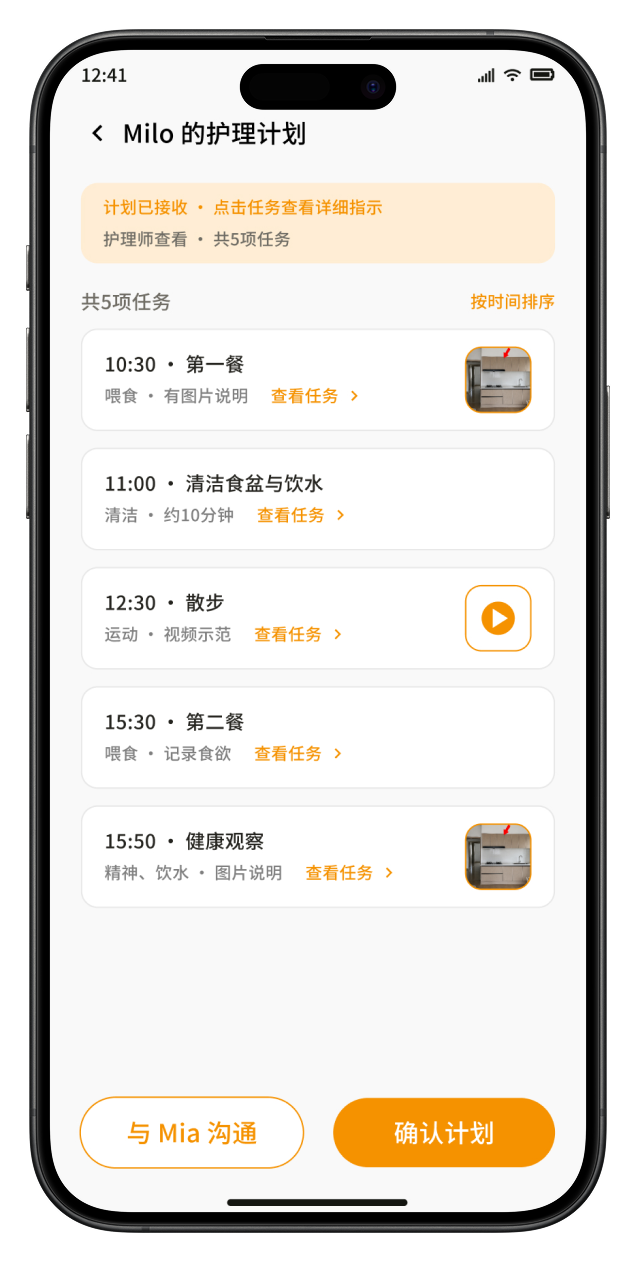
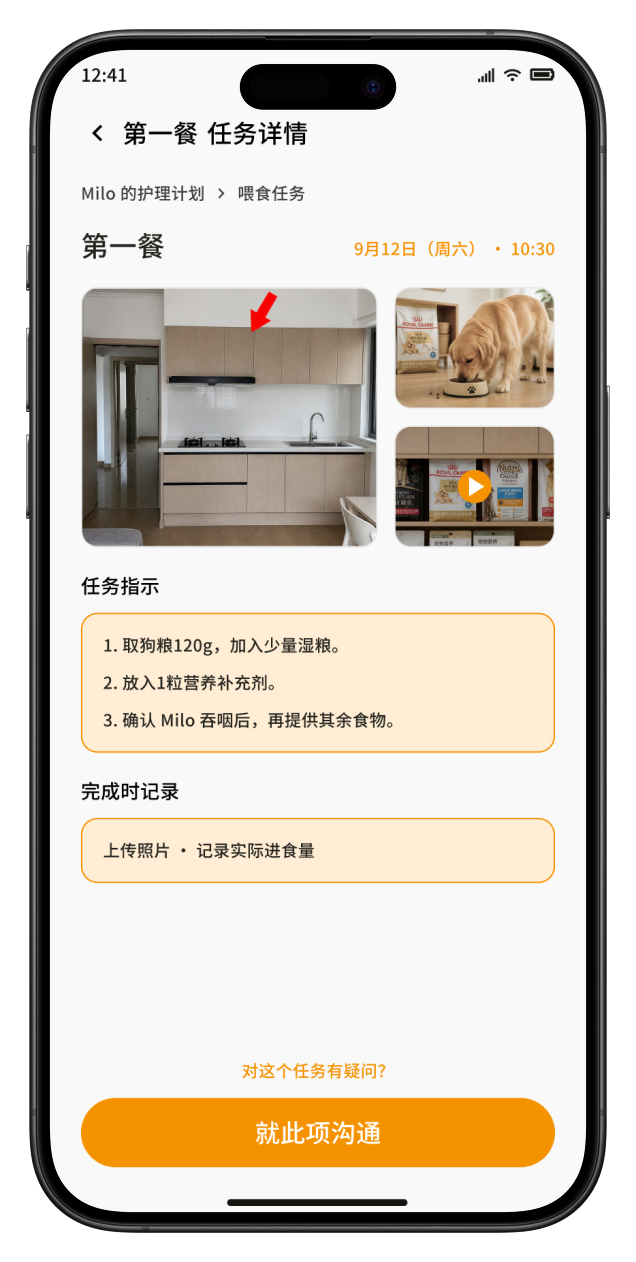
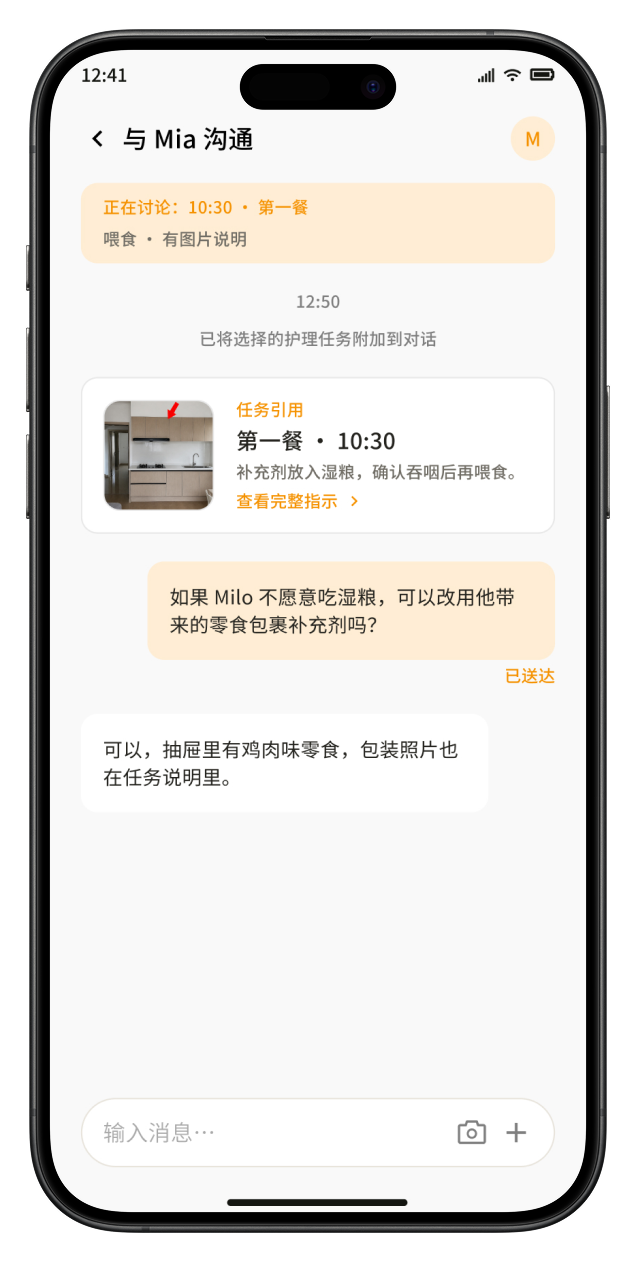
Everyday routines that feel familiar to an owner may still require clarification for a carer. PetaLife turns those details into scheduled care tasks with instructions and recording requirements, and keeps conversations tied to specific tasks so both parties share the same understanding before care begins.

Pet owner
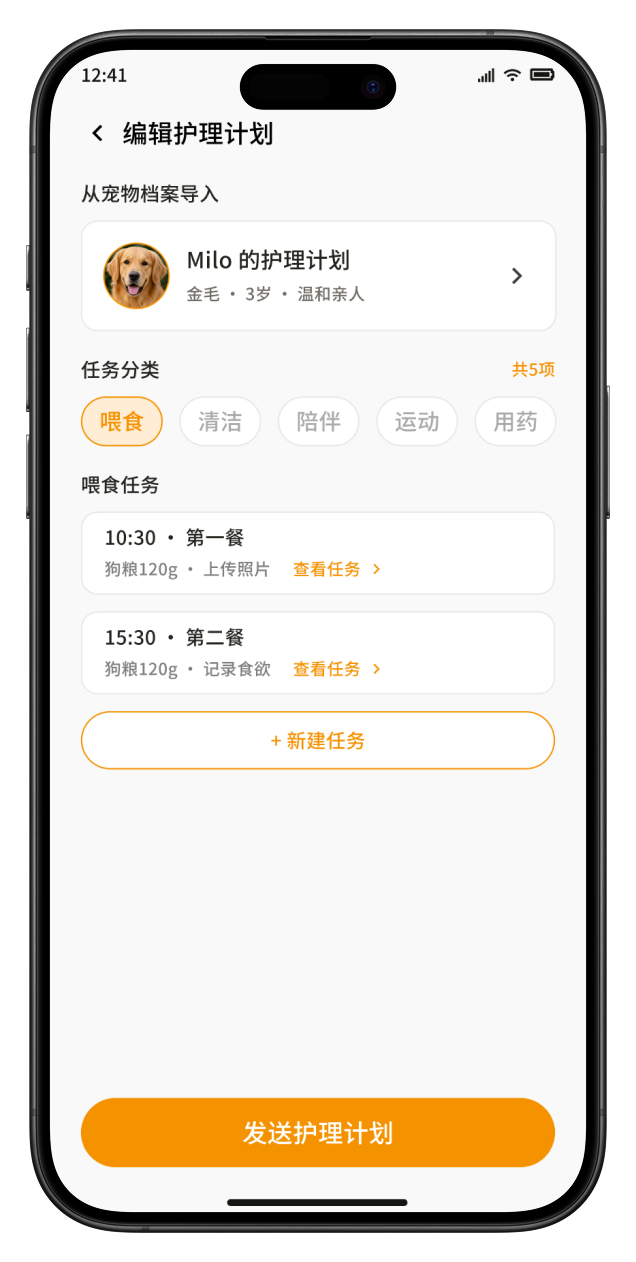
Owner editing Milo’s care plan with tasks grouped by feeding, cleaning, companionship, exercise, and medication

01 Generate the care plan

Import existing care information and organize tasks by feeding, cleaning, companionship, and other categories so owners can refine the daily plan.

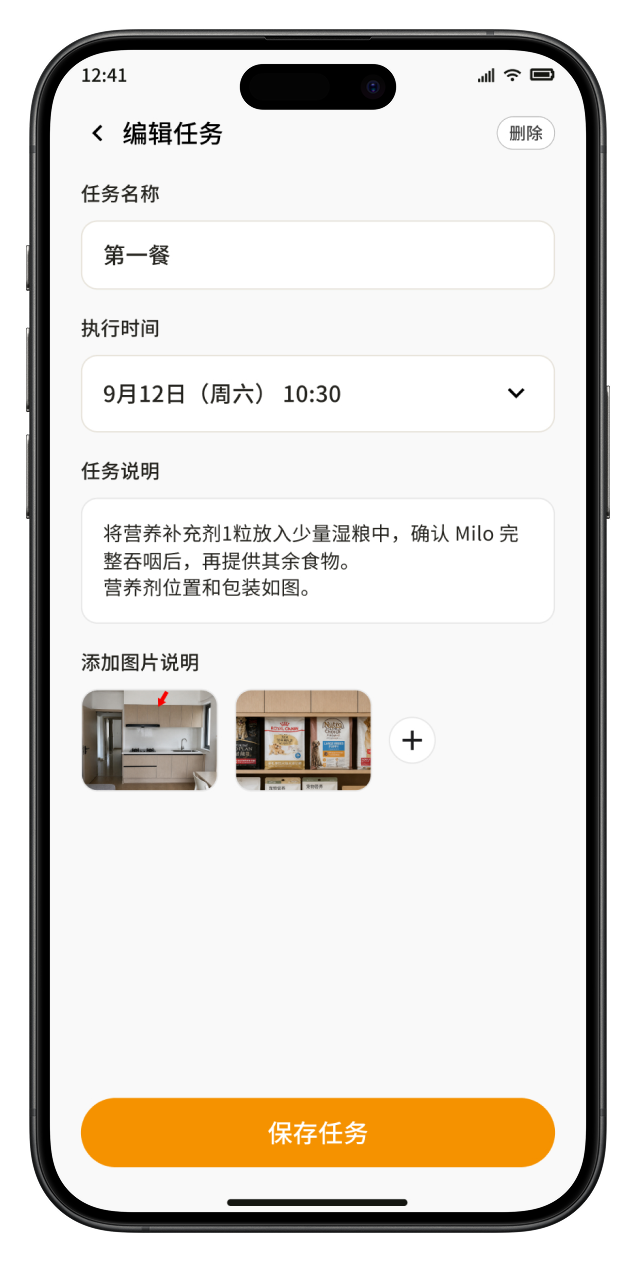
Owner editing a feeding task with execution time, instructions, and reference images

02 Add the details that matter

Set the time, instructions, and reference images for each task so details such as item locations and feeding methods are not lost.

Carer reviewing Milo’s complete care plan in chronological order

03 Review the complete schedule

Carers review tasks chronologically to understand the care rhythm and identify anything that needs clarification before confirming the plan.

First-meal task detail with images, video, instructions, and completion-record requirements

04 See actions and recording needs

Images, video demonstrations, step-by-step instructions, and completion records are brought together in each task detail.

Task-referenced conversation between the carer and owner about the first meal

05 Discuss a specific task

Conversations launched from a task include its reference automatically, keeping both sides clear about the arrangement being discussed.

Carer

From online agreement to in-person care

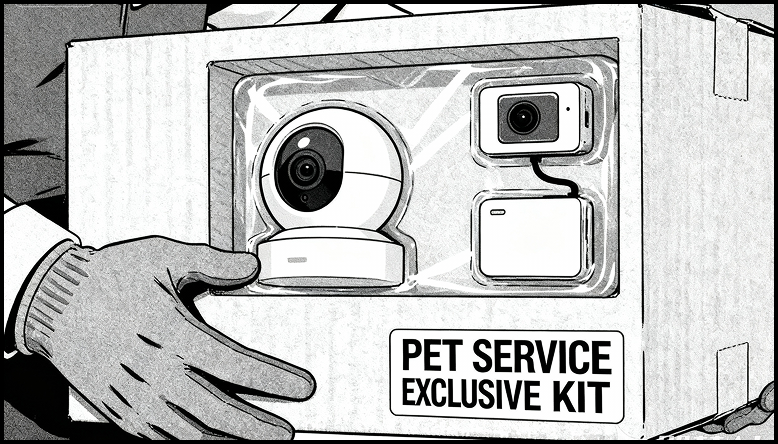
After a service is booked online, PetaLife brings equipment delivery and setup into the journey so owners and carers are ready before care begins, supporting remote viewing and task records later.

PetaLife pet-service equipment kit with a fixed home camera and a wearable carer camera

Platform delivers the equipment

PetaLife sends a fixed home camera to the owner and a wearable chest camera to the carer.

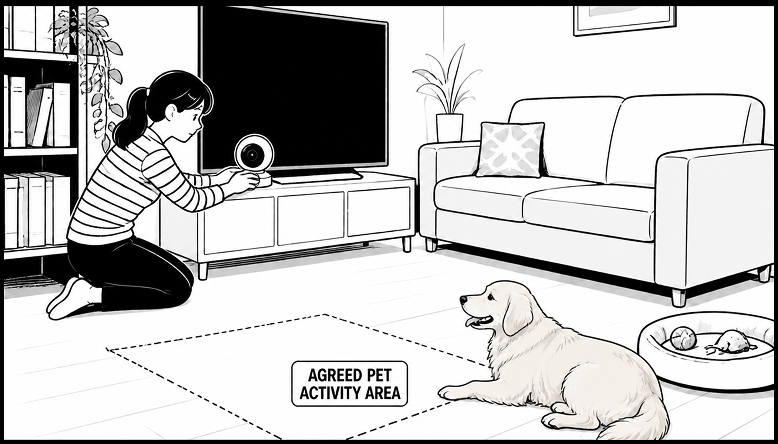
Pet owner installing a fixed camera in the agreed pet activity area

Owner prepares the care space

The owner places the fixed camera in the agreed pet activity area, ready for remote viewing during the service.

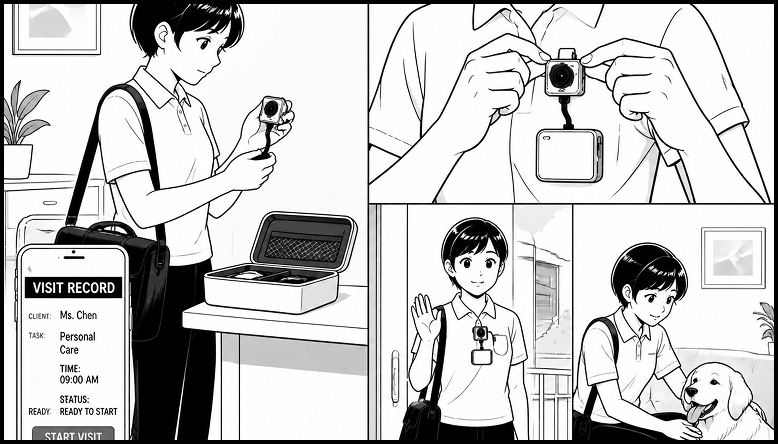
Carer checking and wearing a chest camera before an in-home service

Carer wears the recorder for home visits

Before the visit, the carer checks and wears the camera so the care tasks leave an execution record.

Making care visible and traceable

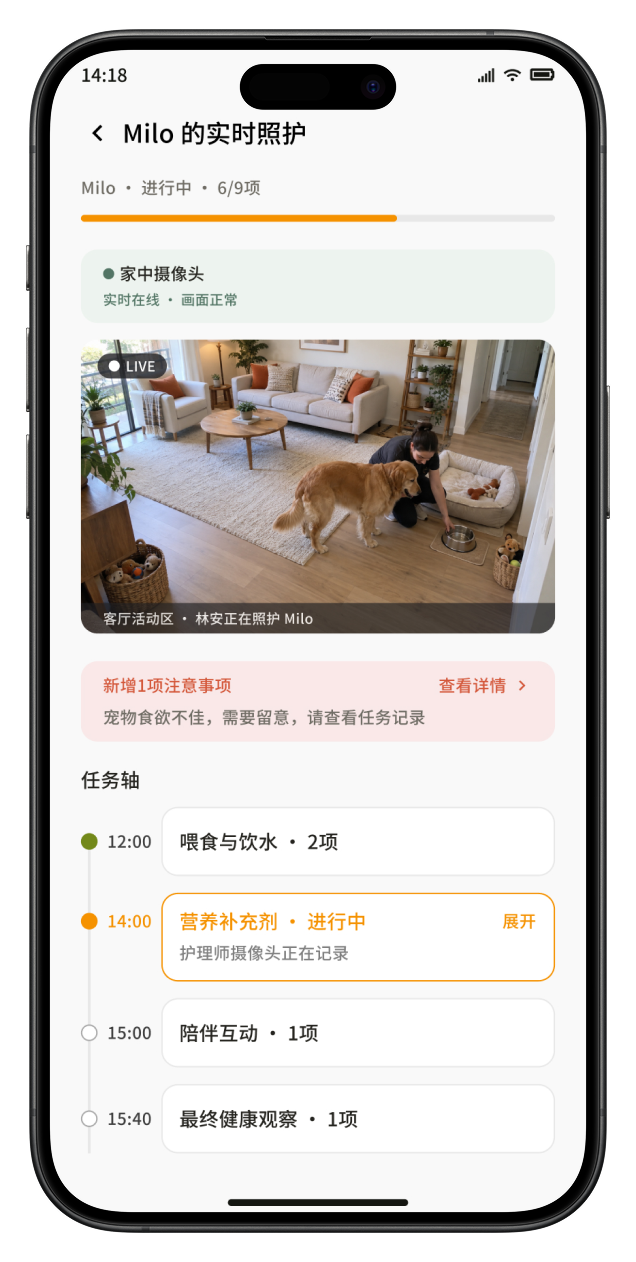
Once care begins, owners need to understand how their pet is doing while carers need to stay focused on the work itself. PetaLife connects progress, live footage, and observations through a task timeline, combining remote viewing and exception alerts so owners can check in when needed and review a complete record afterward.

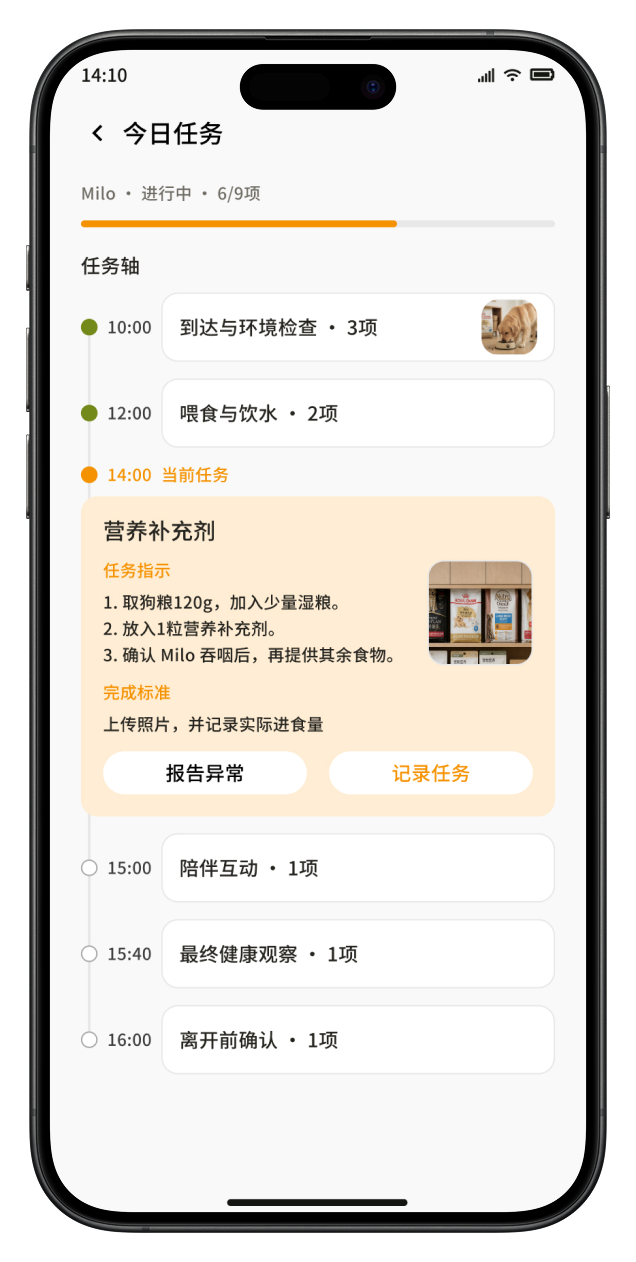
Carer task timeline highlighting the current nutrition-supplement task

01 Focus on the current task

The timeline highlights the current task and keeps instructions, completion criteria, and recording actions together so carers can work in order.

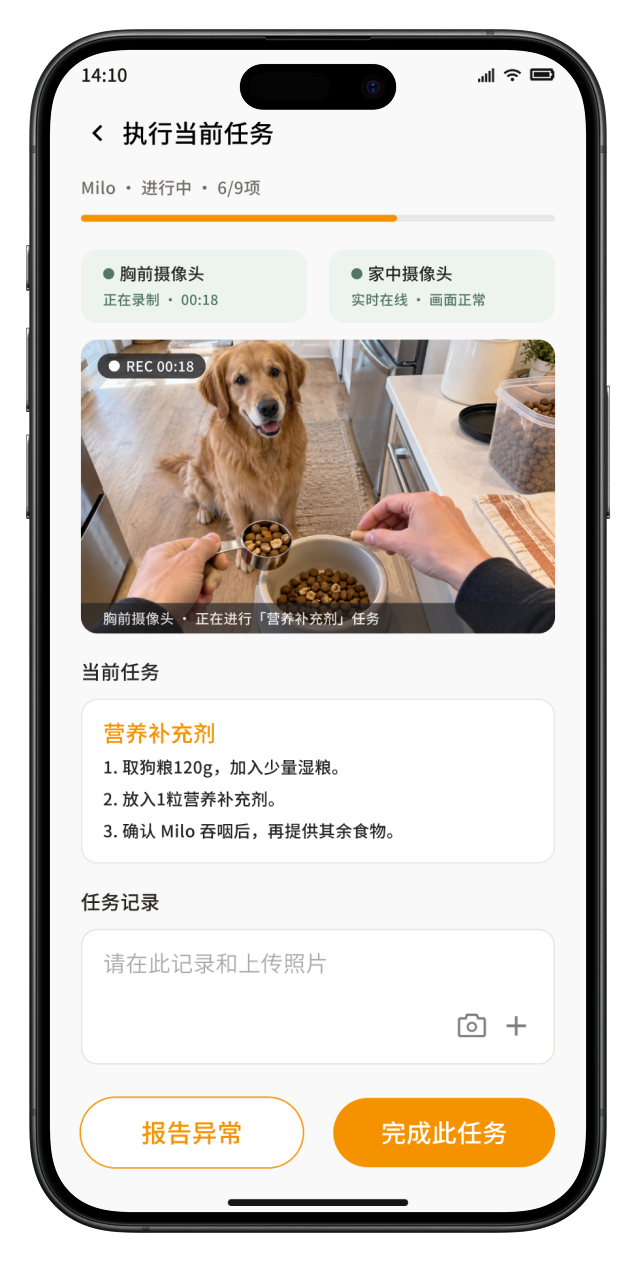
Carer completing a task while chest and home cameras record the care process

02 Care and record at the same time

The chest camera records each task while the carer adds notes and photos and reports anything unusual when necessary.

Carer
Pet owner
Owner remotely viewing Milo’s live care through the fixed home camera

03 Check changes remotely

Owners can view the scene through the fixed home camera, understand the current situation, and open detailed records when needed.

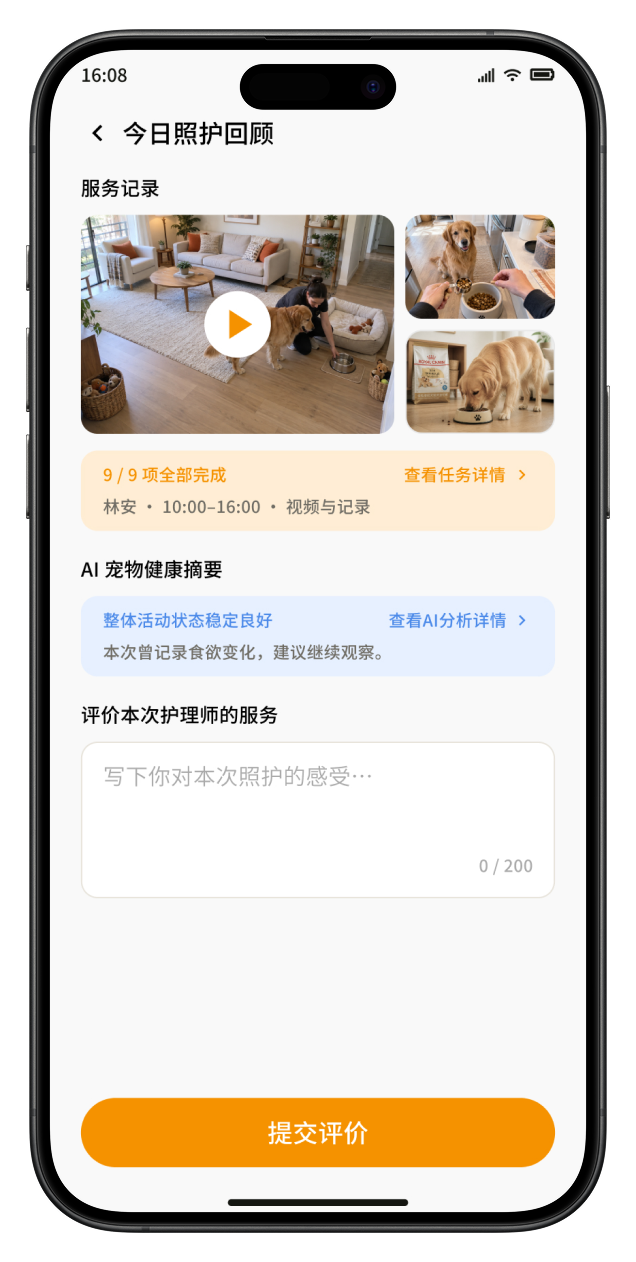
Daily care review with service records, a health summary, and a service rating field

04 Review the service and leave feedback

Task records and service footage are summarized with AI-assisted observations, follow-up prompts, and an invitation to rate the service.

用户测试User Testing

Which real-world risks did user validation reveal?

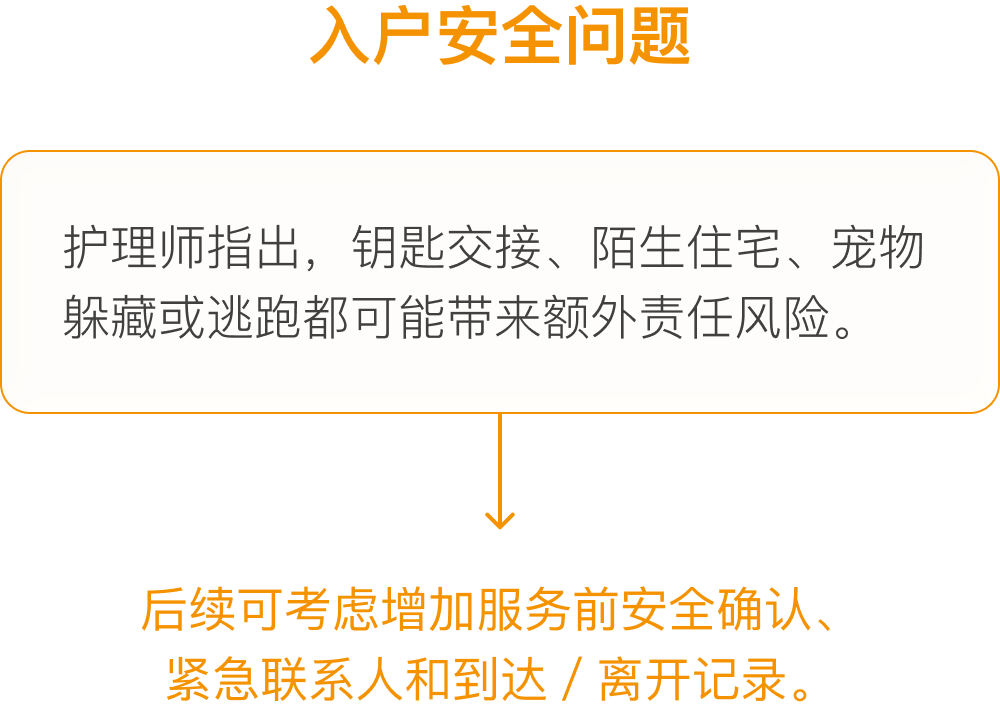
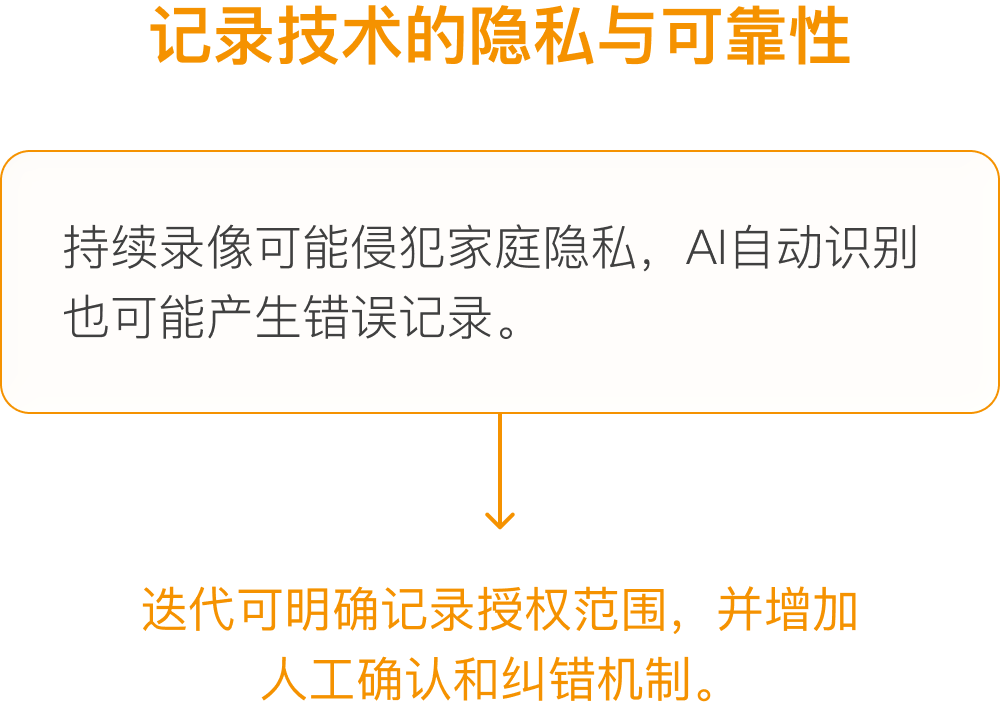
We invited four pet owners and two in-home pet carers to take part in 30-minute semi-structured interviews and scenario walkthroughs, helping us identify potential risks in real service settings.

Safety feedback and proposed improvements for key handover, unfamiliar residents, pet escape risks, emergency contacts, and arrival or departure records.
Privacy and reliability feedback for continuous recording and AI-generated records, with clearer consent, manual review, and correction mechanisms.
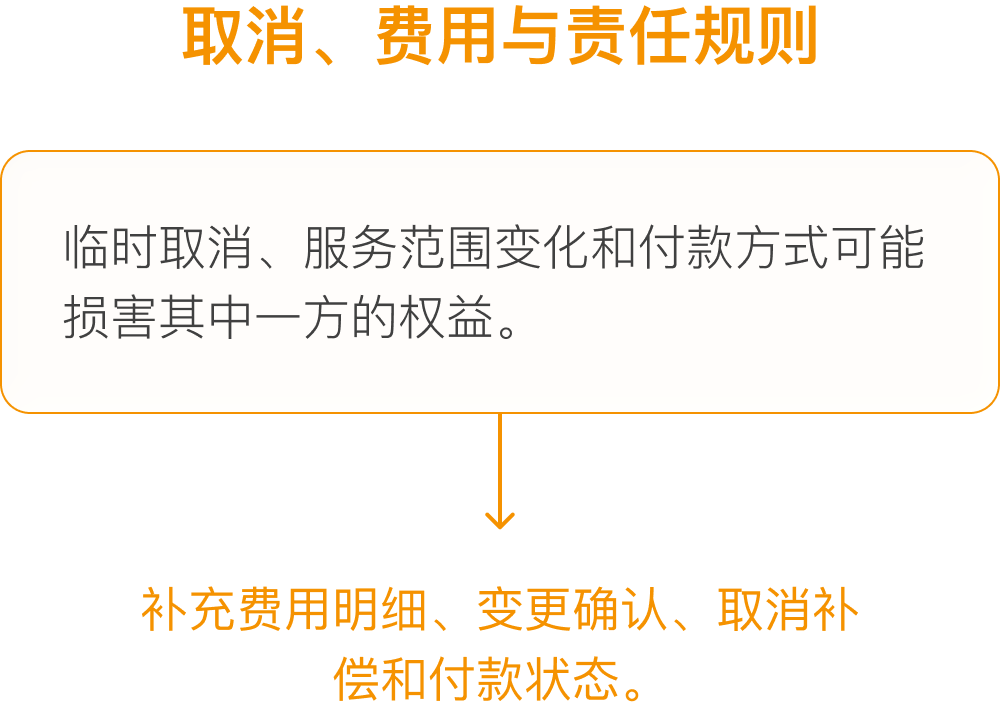
Cancellation, payment, and responsibility feedback, with clearer fees, change confirmation, compensation, and payment status.

Due to the project timeline, detailed design and a second round of validation for these features were not completed.The feedback was organized into directions for the next product iteration, prioritizing safety handover and recording-privacy mechanisms.